

COSMOS App Icon
COSMOS Solar System Atlas
Interactive 3D Atlas · Solar System

Explore the Solar System.

Explore planets, travel between worlds, and follow the motion of celestial bodies. Real astronomical data meets an interactive experience built for discovery.

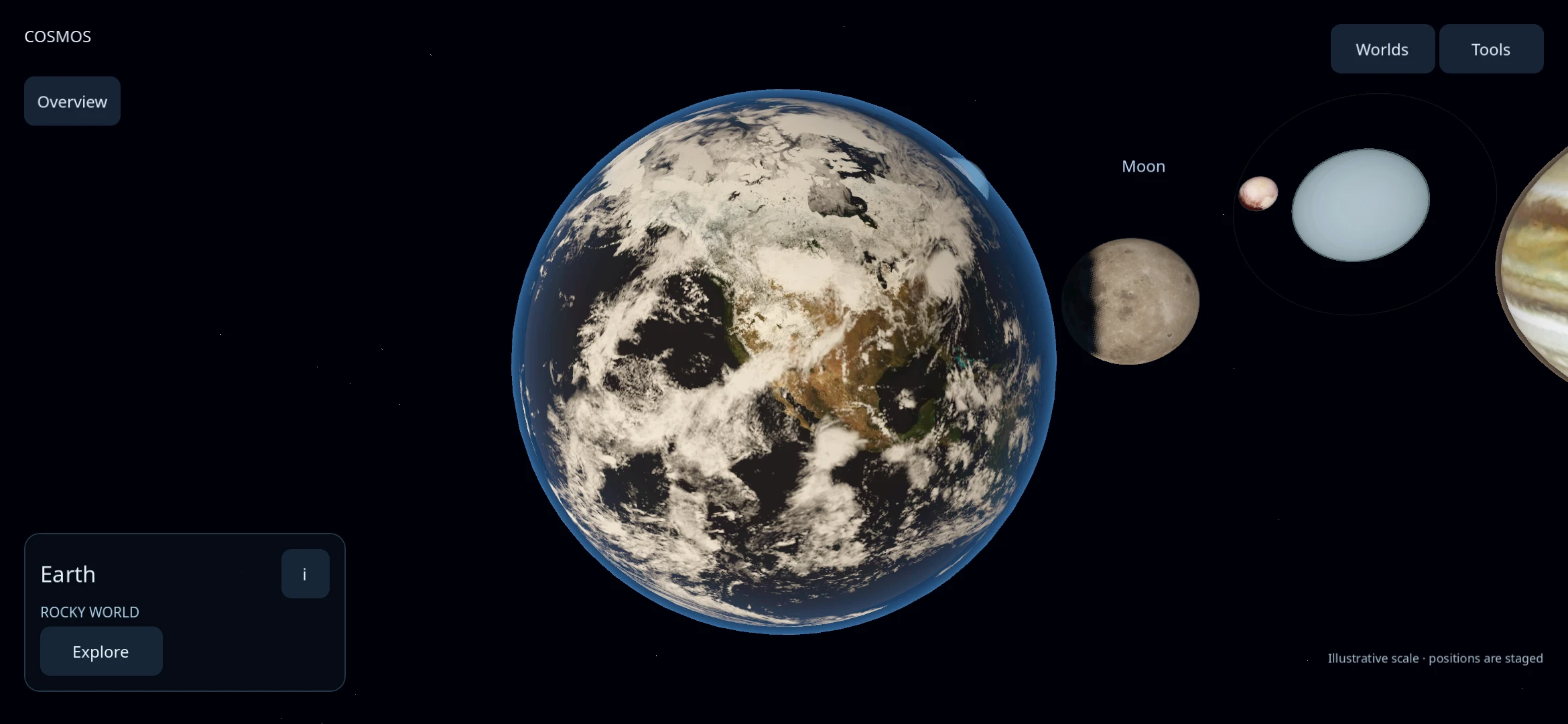
COSMOS Interface: High resolution Earth globe with atmospheric scattering and navigation UI
Earth in COSMOS 3D Atlas · Authentic physical scale and atmospheric scattering In-app view

A Sense of Scale and Freedom

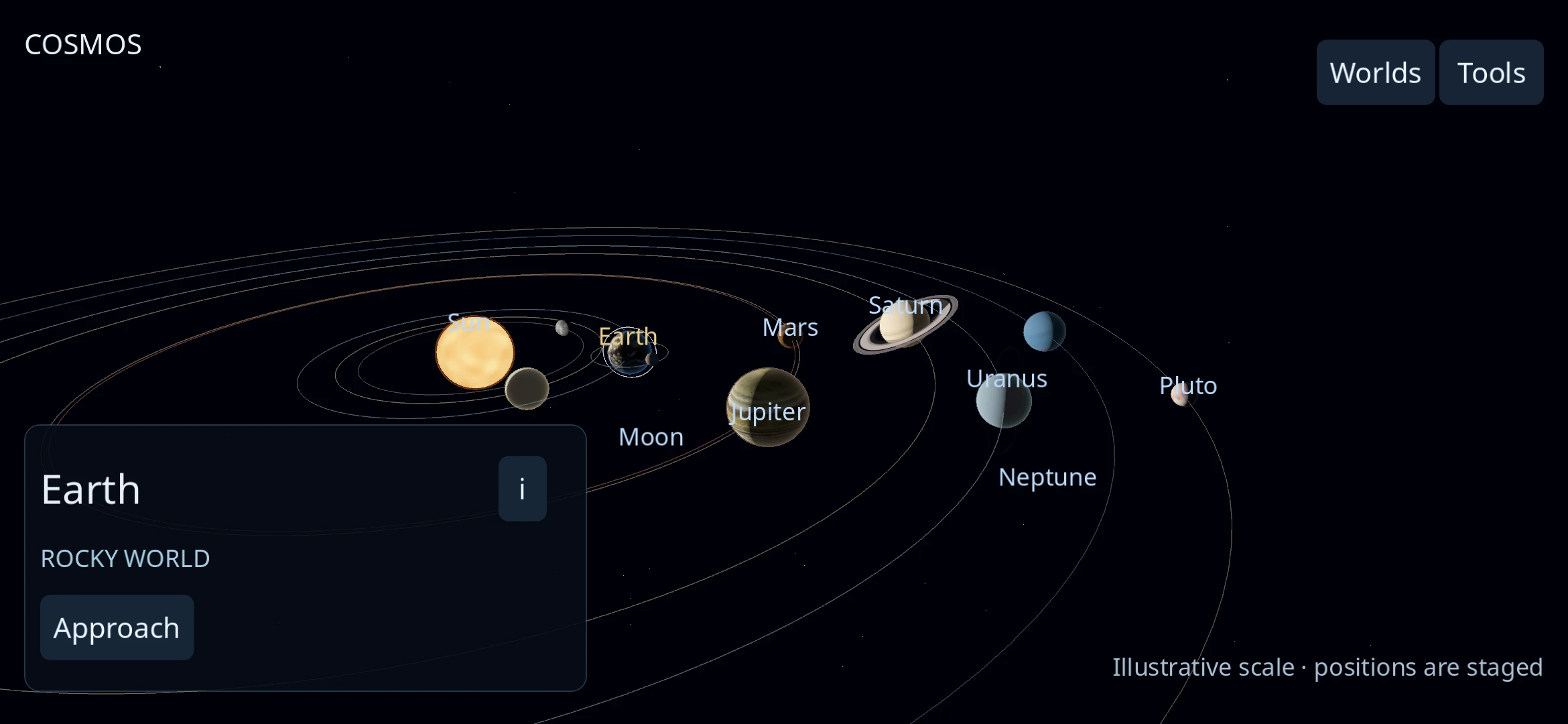
A unified camera navigation system blends an overview of orbital paths with seamless flight to each world at its authentic physical scale.

Complete Solar System Overview in COSMOS

From Orbits to Planets

The camera glides effortlessly from a wide view of the Solar System to an intimate orbit around any world, aligning with its true scale and rotation.

Time in Your Hands

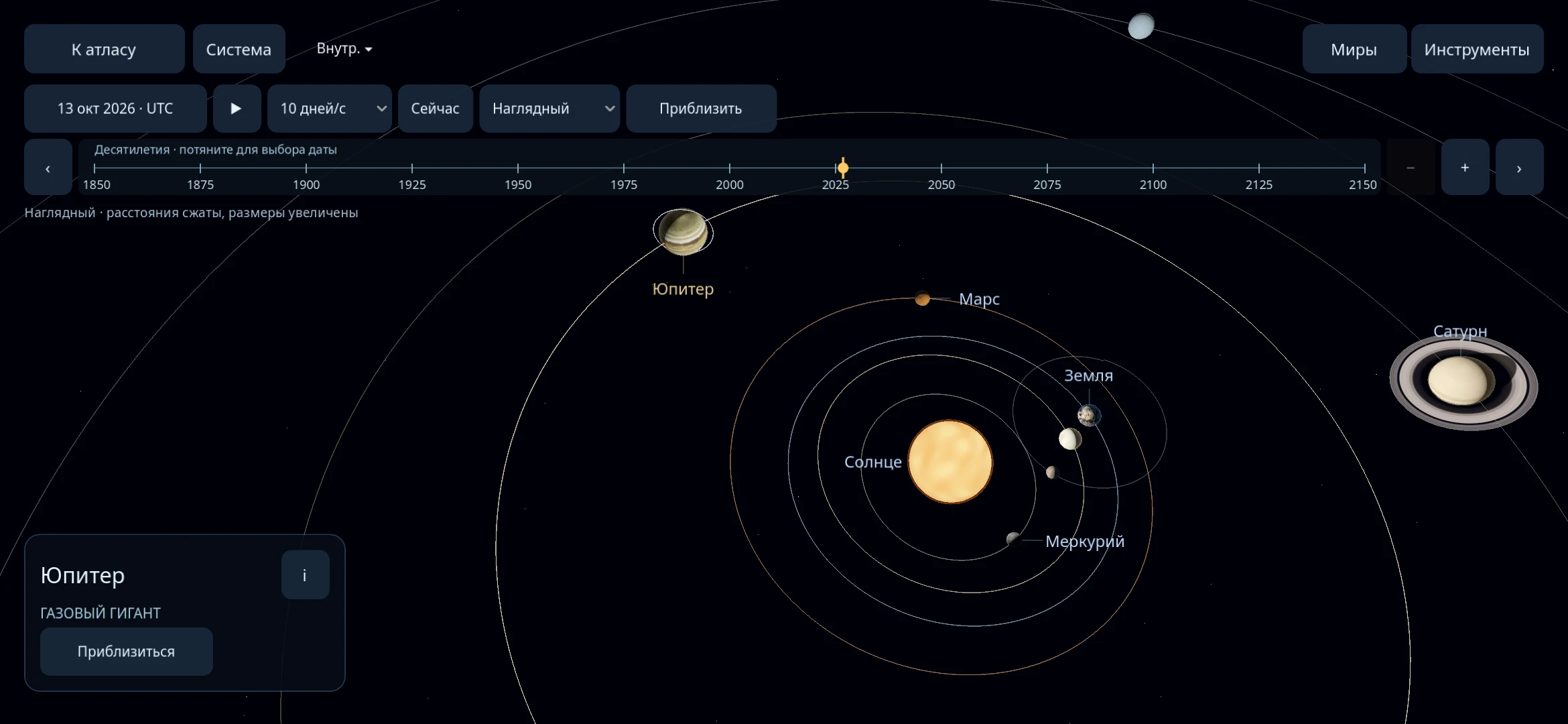
Interactive time controls let you alter the pace from hours to days per second, following day and night cycles across each planet.

Eleven Celestial Bodies

Sun, Mercury, Venus, Earth, Moon, Mars, Jupiter, Saturn, Uranus, Neptune, and Pluto. Individual axial tilts, rotation periods, and observational surface maps.

Ephemeris Clock

Select any UTC calendar date between 1850 and 2150 with instant recalculation of high-precision interplanetary positions based on JPL DE440s data.

Directional Lighting

Illuminated solely from the Sun's physical position. Realistic day/night terminators, planetary ring shadows, and soft atmospheric Rayleigh scattering rims.

Explore Worlds

Follow planetary motion, explore the topography of other worlds, and journey across the Solar System.

COSMOS Orbital Mode with Timeline Scrubber
NASA JPL DE440s Ephemerides

300 Years of Orbital Ephemerides

Planetary orbits are calculated from high-precision NASA JPL DE440s ephemerides covering three centuries — from 1850 through 2150 UTC.

  • Intuitive timeline scrubber with smooth semantic zoom from centuries down to individual days.
  • Flexible viewing modes: clear Readable scale and True scale with authentic astronomical distances.
  • Direct calendar date selection (YYYY-MM-DD) and instant return to real time ("Now").
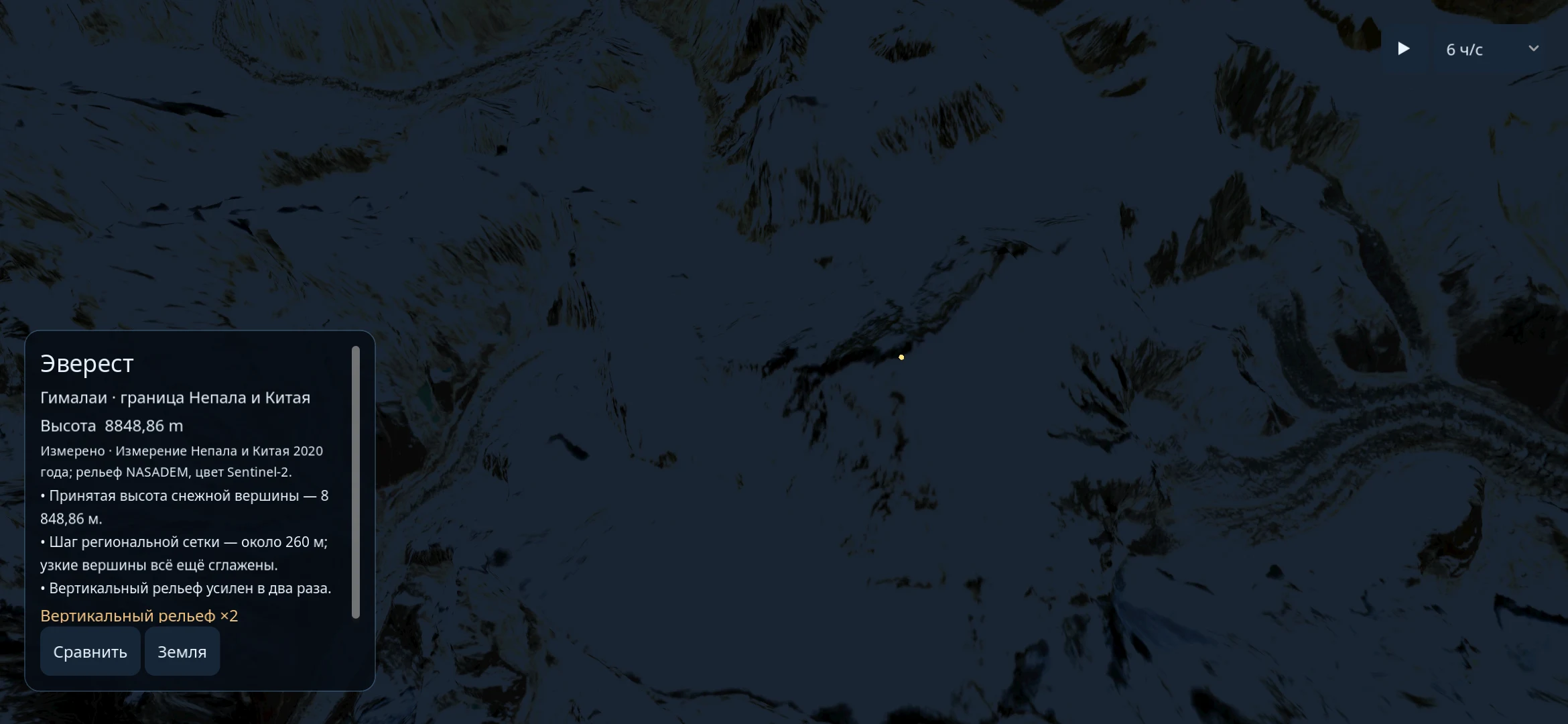
COSMOS Topographic Discoveries: Mount Everest and Satellite Imagery
Topography & Satellite Data

Surface Discoveries

Discoveries mode reveals the real 3D relief of iconic planetary landmarks, from Earth's highest peaks to Martian volcanoes.

  • Earth: Mount Everest and the Grand Canyon (NASADEM elevations, Sentinel-2 and Landsat 8 imagery).
  • Challenger Deep: NOAA ETOPO bathymetric model visualizing the ocean floor.
  • Mars: Olympus Mons shield volcano with NASA MOLA laser altimetry and THEMIS infrared mosaic.
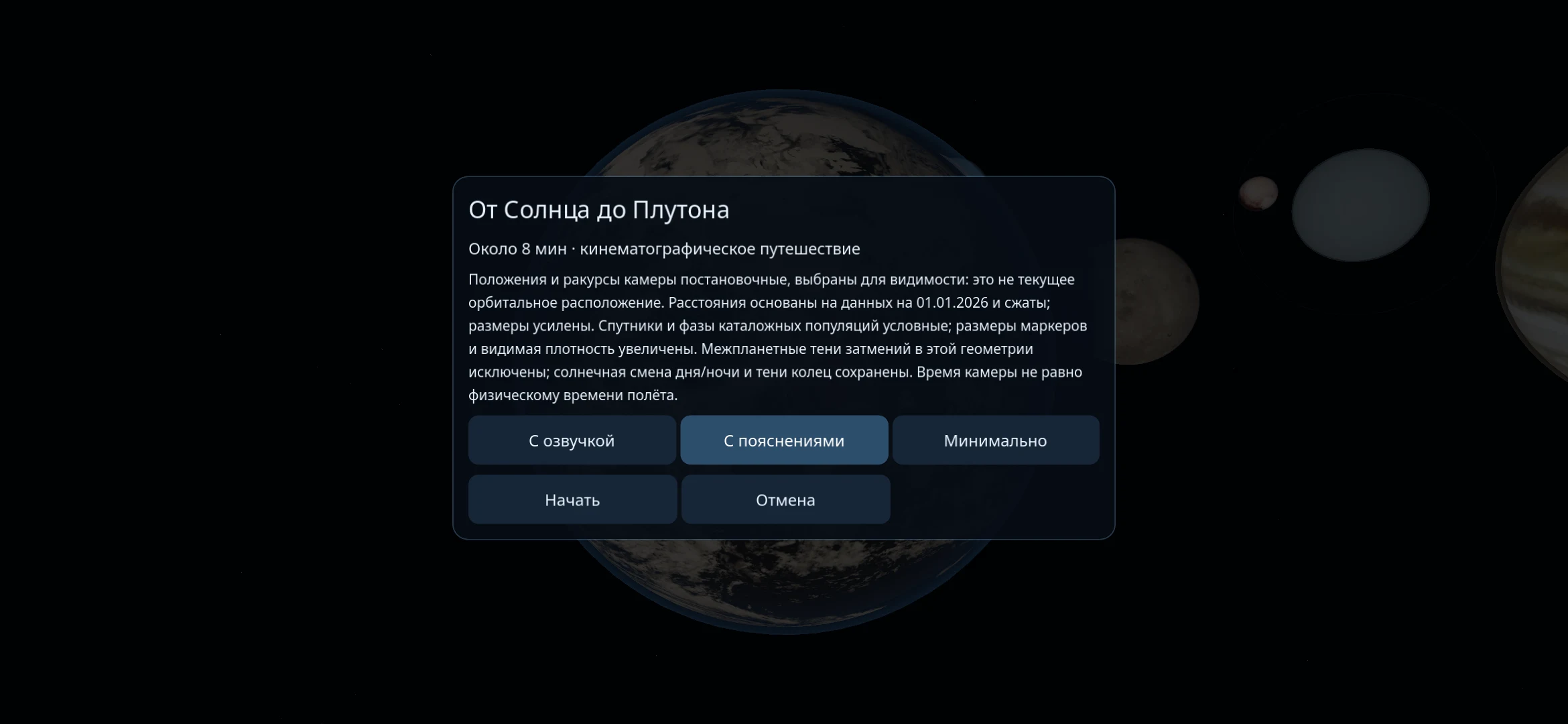
COSMOS Outbound Journey: From Sun to Pluto
Expedition Path

Journey: From Sun to Pluto

A cinematic guided tour across the entire Solar System. The camera glides from world to world across interplanetary distances.

  • Three pacing schedules: Guided, Brief, and Contemplative.
  • Main Asteroid and Kuiper belts modeled after NASA JPL small-body catalogs.
  • Complete freedom to pause, look around, and continue the flight at any time.
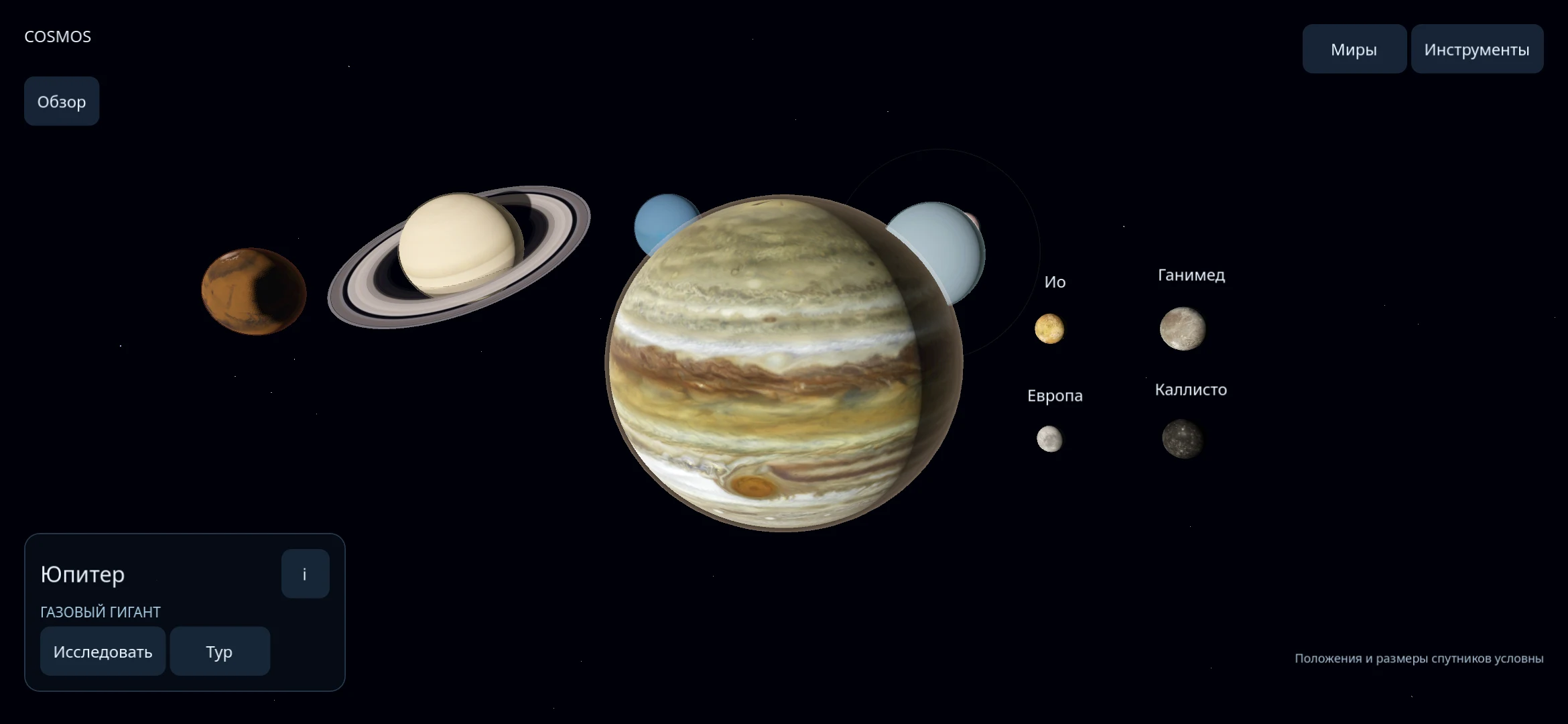
Jupiter Cloud Belts and Ring System in COSMOS
Atmospheres & Giants

Atmospheric Descent & Gas Giants

For Earth, Descent mode offers a smooth flight down through atmospheric layers to 16 km altitude, displaying altitude, pressure, temperature, and density.

  • Jupiter: Cloud belts, the Great Red Spot, and swirling storms from Hubble OPAL imagery.
  • Saturn: Ring opacity profiles and subtle shadows based on Cassini ISS observations.
  • Uranus & Neptune: Faithful reconstructions from Voyager 2 encounters and Hubble observations.

Eleven Explored Worlds

Sun Mercury Venus Earth Moon Mars Jupiter Saturn Uranus Neptune Pluto

Each celestial body provides a verified fact card with astronomical parameters: mass, mean radius, orbital period, rotational characteristics, and physical taxonomy.

About COSMOS

COSMOS is an independent astronomical exploration project created by Embersoft. Built upon the open-source Godot Engine, it is designed as a calm, contemplative digital planetarium for visual astronomy and space science.

We built COSMOS as a deliberate antithesis to cluttered, gamified mobile apps: there are no push notifications, ad networks, in-app purchases, or background trackers. Nothing stands between you and the scale of our Solar System.

About the App

Platforms Android (Tablets & Smartphones) · iOS — coming soon
Offline Architecture 100% Offline · No ads or trackers
Privacy Zero accounts and no personal data collection
Astronomical Data 11 celestial bodies · 300 years of NASA JPL ephemerides
Time Control From real-time up to 24 hours per second
Localization English (EN) & Russian (RU)
Scientific Sources and Attribution
  • Planetary Imagery: NASA Blue Marble, SVS CGI Moon Kit, Viking Mars, Mariner 10, Cassini ISS.
  • Orbital Ephemerides: NASA JPL DE440s & NAIF SPICE kernels.
  • Elevation & Topography: NASADEM (NASA/JPL/USGS LP DAAC), USGS 3DEP, NOAA ETOPO 2022.
  • Satellite Visual Products: Copernicus Sentinel-2 L2A (ESA), USGS Landsat 8 Level-2, THEMIS.
  • Atmospheric Standard: U.S. Standard Atmosphere 1976.
  • Typography & Engine: Noto Sans (SIL OFL 1.1), Godot Engine (MIT License).

COSMOS is an independent product developed by Embersoft. All NASA, USGS, NOAA, and Copernicus media are utilized under their respective public open-access and media usage guidelines. This project maintains no official affiliation with, or endorsement by, NASA or any governmental space agency.